


The Indianapolis 500 2026 will bring another historic chapter to America’s most famous open-wheel race. Known worldwide as the Indy 500, this 500-mile classic combines speed, tradition, strategy, and huge fan energy. For motorsport followers and racing bettors exploring guides like Betwinner Aviator, the event offers a complete mix of spectacle, statistics, and unpredictable drama.
What Is the Indianapolis 500?
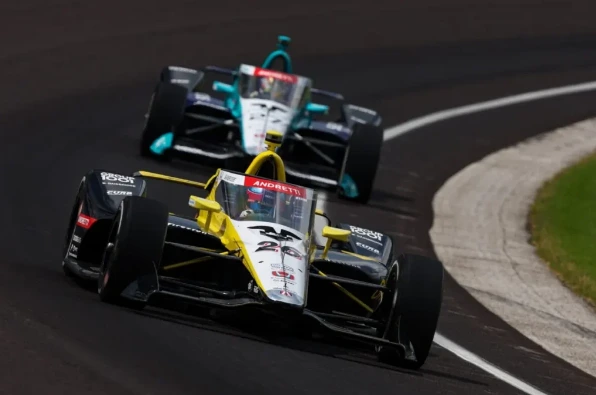
The Indianapolis 500, often called the Indy 500, is a 500-mile open-wheel race and the biggest event on the IndyCar calendar. Drivers complete 200 laps around Indianapolis Motor Speedway, fighting for one of the most prestigious victories in world racing. The 2026 edition will be the 110th running of the race. It is more than a sporting event; it is a full racing festival with practice sessions, qualifying drama, pre-race ceremonies, and a huge global audience.
History and Importance of the Indy 500
The first Indianapolis 500 took place in 1911, making it one of the oldest and most prestigious motor races in the world. Over more than a century, the event has become a cornerstone of American racing culture. It is also part of motorsport’s informal “Triple Crown,” usually discussed alongside the Monaco Grand Prix and the 24 Hours of Le Mans.
| Key Indy 500 Facts | Details |
| First race | 1911 |
| Race distance | 500 miles |
| Laps | 200 |
| Venue | Indianapolis Motor Speedway |
| 2026 edition | 110th Running |
| 2026 race date | Sunday, May 24, 2026 |
| Main series | NTT INDYCAR SERIES |
The race matters because it rewards more than pure speed. Winners must balance tire life, fuel strategy, traffic management, pit execution, and courage at more than 220 mph. A driver can dominate for 190 laps and still lose because of a late caution, a slow pit stop, or a risky restart.
Why It Is Called “The Greatest Spectacle in Racing”
The phrase “The Greatest Spectacle in Racing” fits the Indy 500 because the event is massive in every sense. The crowd, the speed, the traditions, and the scale of the venue create an atmosphere that few races can match. What makes the spectacle special:
- Huge grandstands and a festival-like atmosphere.
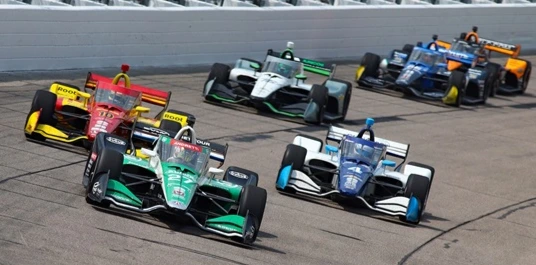
- More than 30 cars racing inches apart at extreme speed.
- Deep traditions such as “Back Home Again in Indiana.”
- A mix of former winners, rookies, veterans, and global stars.
- A race format where strategy can completely change the result.
Indianapolis 500 2026 Schedule
The Indianapolis 500 2026 will take place during the traditional Month of May at Indianapolis Motor Speedway. The full program includes practice, qualifying, Carb Day, and the main race. Fans usually follow the entire build-up because each session gives clues about race pace, possible favorites, and how the field may perform on Race Day. Those who plan to follow the event from a betting perspective can also complete Betwinner sign up in advance, so they are ready before the main race weekend begins.
Race Date and Start Time
The main race is scheduled for Sunday, May 24, 2026. Gates are listed to open at 6:00 a.m., driver introductions are set for 11:47 a.m., the national anthem for 12:24 p.m., and the green flag for 12:45 p.m. Eastern Time.
| Race Day Item | Scheduled Time |
| Gates open | 6:00 a.m. ET |
| Driver introductions | 11:47 a.m. ET |
| National anthem | 12:24 p.m. ET |
| “Drivers, to your cars” command | 12:29 p.m. ET |
| “Back Home Again in Indiana” | 12:36 p.m. ET |
| Command to start engines | 12:38 p.m. ET |
| Green flag | 12:45 p.m. ET |
Because motorsport schedules can shift due to weather, track conditions, or broadcast decisions, fans should check the official IMS and IndyCar channels during race week.
Practice, Qualifying, and Carb Day
Practice is where teams test race setups, aerodynamic balance, and traffic behavior. Qualifying determines the starting grid, while Carb Day gives teams one final chance to check race trim before Sunday. IMS lists Indianapolis 500 practice beginning Tuesday, May 12, 2026, with a 10:00 a.m. to 6:00 p.m. Eastern schedule for that opening day. Typical Indy 500 week structure includes:
- Opening practice sessions for baseline setup.
- “Fast Friday” boost-focused runs before qualifying.
- Qualifying weekend to set the 33-car field.
- Carb Day final practice and pit stop competition.
- Race Day ceremonies and the 500-mile main event.
Indianapolis Motor Speedway Guide
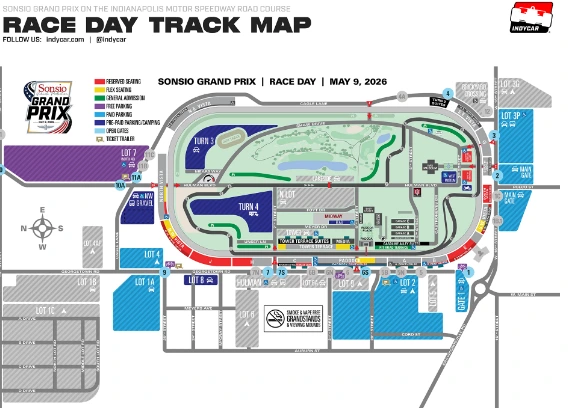
Indianapolis Motor Speedway, often called IMS or “The Brickyard,” is one of the most recognizable venues in world sport. Its oval layout is simple on paper but highly complex in execution. The track is 2.5 miles long, with four turns and two long straights connected by short chutes.
Track Layout and Key Features
The oval is famous for its flat character compared with many American speedways. The turns have about 9.2 degrees of banking, which means cars cannot rely only on steep banking for grip. Drivers must be precise with steering, throttle, and aerodynamic positioning.
| Track Feature | Description |
| Layout | Rectangular oval |
| Length | 2.5 miles / 4.023 km |
| Turns | 4 |
| Race distance | 200 laps / 500 miles |
| Turn banking | About 9.2 degrees |
| Surface | Asphalt with brick start-finish line |
| Nickname | The Brickyard |
The long frontstretch and backstretch reward top speed, while the corners punish small mistakes. A poor exit from Turn 2 or Turn 4 can cost momentum down the straights, making overtakes harder and increasing pressure during restarts.
Fan Atmosphere and Famous Corners
The atmosphere at Indianapolis is a major part of the event’s identity. Fans arrive early, fill the grandstands, and create a festival feeling around the venue. Turn 1 is known for bold moves after the front straight, while Turn 4 is crucial because it leads to the main stretch and the finish line. Best fan experiences often include:
- Watching qualifying to see cars run at maximum speed.
- Visiting the Pagoda and frontstretch areas.
- Following pit lane strategy during long green-flag runs.
- Experiencing Carb Day before race weekend.
- Staying for the post-race celebration and trophy ceremony.
Top Drivers and Teams to Watch
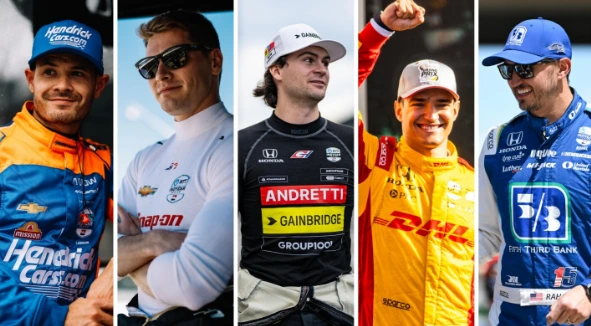
The 2026 field will include full-time IndyCar contenders, former winners, rookies, and special Indy-only entries. The final entry list can change close to the event, but recent contenders such as Alex Palou, Josef Newgarden, Pato O’Ward, Scott Dixon, Will Power, and other leading IndyCar names are likely to shape the conversation if confirmed.
Former Winners and Rising Stars
Former winners usually attract attention because they understand how the race changes over 500 miles. They know when to attack, when to save fuel, and how to stay patient during long green-flag runs.
| Driver Type | Why It Matters at Indy |
| Former winners | Know late-race pressure and restart tactics |
| Series champions | Usually strong across setup, tire care, and racecraft |
| Oval specialists | Comfortable in traffic at high speed |
| Rookies | Can surprise in clean air but face a steep learning curve |
| One-off entries | May bring veteran experience or special team focus |
Rising stars can also become serious contenders. If a young driver qualifies well and avoids early mistakes, they may stay near the front and challenge more experienced rivals.
Chevrolet vs Honda Rivalry
The Chevrolet vs Honda rivalry is central to modern IndyCar. Engine performance affects top speed, fuel mileage, drivability, and qualifying pace. At Indianapolis, the difference between manufacturers can become especially visible because long straights magnify power and aerodynamic efficiency. Key areas in the manufacturer battle:
- Qualifying boost performance.
- Fuel efficiency during long green runs.
- Reliability over 500 miles.
- Acceleration out of Turns 2 and 4.
- Race balance in traffic.
A strong manufacturer package does not guarantee victory, but it can give teams more strategic flexibility, especially when fuel windows and caution timing become decisive.
How Indy 500 Qualifying Works
Indy 500 qualifying is one of the most intense parts of the event. Unlike many race weekends where qualifying is short and simple, Indianapolis uses multiple stages to determine the front rows, the pole winner, and the final 33-car starting field.
Fast Nine Shootout Explained
The Fast Nine Shootout is the high-pressure session where the fastest cars from qualifying fight for pole position. Each car attempts a four-lap average speed, and consistency matters as much as peak speed. One small lift, one gust of wind, or one poor corner can drop a driver several positions.
| Qualifying Element | What It Means |
| Four-lap average | Speed is averaged across four consecutive laps |
| Pole position | Awarded to the fastest final qualifying run |
| Fast Nine | Group battling for the top starting spots |
| Bump Day | Determines who makes or misses the 33-car field |
| Weather impact | Wind and temperature can change car balance |
Starting Grid and Strategies
Starting near the front is helpful, but it does not guarantee victory. The Indy 500 is long enough for strategy to reshape the entire field. Pit timing, caution periods, tire choices, and fuel saving can all change the race order. Common race strategies include:
- Saving fuel early to extend pit windows.
- Staying in the lead pack without overheating tires.
- Using undercuts or overcuts during pit cycles.
- Taking advantage of caution periods.
- Planning for late restarts with fresh tires.
Indianapolis 500 Traditions
The Indy 500 is famous because its traditions are as important as the racing. Many fans watch not only for the winner but also for the ceremonies, songs, symbols, and emotional rituals that make the event feel different from any other race.
Milk Celebration and Indiana Song
The winner drinking milk in Victory Lane is one of the most iconic images in motorsport. The tradition is deeply associated with the race and has become a symbol of victory at Indianapolis. Before the race, “Back Home Again in Indiana” is another emotional highlight, connecting fans, drivers, and the state’s racing identity. Other famous traditions include:
- The Borg-Warner Trophy presentation.
- The Yard of Bricks at the start-finish line.
- The command to start engines.
- The pace car leading the field.
- The winner kissing the bricks after victory.
Iconic Moments in Race History
Indy 500 history is filled with legendary finishes, heartbreaks, and breakthrough performances. Four-time winners such as A.J. Foyt, Al Unser, Rick Mears, and Hélio Castroneves helped define the event’s mythology. Recent years have added new stories, including dramatic late passes, redemption wins, and dominant team performances.
The race remains powerful because every edition can create a new career-defining moment. A driver may be remembered forever for one bold pass, one perfect restart, or one flawless final stint.
Indianapolis 500 Betting Predictions
Indy 500 betting requires caution because the race is unpredictable. A strong favorite can lose through a pit penalty, mechanical issue, caution sequence, or traffic problem. Smart predictions should consider form, team strength, qualifying speed, engine package, pit crew performance, and previous Indy results. For users comparing betting accounts, guides such as https://guidebook.betwinner.com/account/ can help explain account-related basics before exploring motorsport markets.
Popular Betting Markets
Indy 500 betting usually offers more than a simple race-winner market. Many bettors prefer markets that reduce risk or focus on specific performance outcomes.
| Betting Market | What Bettors Evaluate |
| Race winner | Driver pace, team form, experience |
| Pole winner | Qualifying trim and four-lap speed |
| Top 3 / Top 5 finish | Consistency and lower-risk performance |
| Head-to-head matchups | Comparing two drivers directly |
| Manufacturer winner | Chevrolet vs Honda strength |
| Fastest lap | Clean air, setup, and late-race pace |
2026 Race Predictions
Early 2026 predictions should remain flexible until the entry list, practice speeds, and qualifying results are known. However, several factors are likely to matter:
- Former winners should be respected because experience is crucial.
- Chip Ganassi Racing and Team Penske-style operations are usually strong at Indianapolis.
- Drivers with excellent fuel-saving ability can gain track position.
- Qualifying speed matters, but race pace in traffic matters more.
- Weather and cautions can completely change the final 50 laps.
A balanced prediction would focus on proven oval performers, strong pit crews, and drivers who combine patience with late-race aggression. For outright picks, wait until practice and qualifying data reveal which cars are genuinely comfortable in traffic.
How to Watch Indianapolis 500 2026
The 2026 Indy 500 is expected to be available on FOX in the United States, following FOX Sports’ IndyCar broadcast rights agreement that began with the 2025 season. AP reported that FOX secured IndyCar rights starting in 2025, including network coverage of all races and Indy 500 qualifying.
TV Channels and Streaming Platforms
In the United States, IndyCar coverage is connected with FOX Sports. International fans should follow local motorsport broadcasters or official IndyCar platforms for confirmed details.
| Viewing Option | Best For |
| TV broadcast | Full race coverage |
| Sports streaming apps | Watching on mobile or laptop |
| Official IndyCar channels | Updates and highlights |
| IMS website | Schedule and event information |
| Social media | Quick news and live reactions |
Best Ways to Follow Live Updates
Fans who cannot watch the full broadcast can still follow the race through live timing, social media, radio-style updates, and official IndyCar coverage. The official IndyCar site also promotes its app and follow options for series news and updates. Good live-follow methods include:
- Official IndyCar app and website.
- Indianapolis Motor Speedway updates.
- Team and driver social media accounts.
- Live timing screens during practice and qualifying.
- Motorsport news sites for session summaries.
Why the Indy 500 Is So Popular
The Indy 500 is popular because it combines history, speed, danger, strategy, and national identity. It is accessible enough for casual fans but complex enough for dedicated motorsport followers. Every lap can look simple from a distance, yet every corner requires precision at extreme speed.
Global Popularity and IndyCar Impact
Although the race is deeply American, its influence is global. Drivers from different countries compete, international broadcasters follow the event, and racing fans compare it with Formula 1, endurance racing, NASCAR, and other major motorsport categories. The Indy 500 also gives IndyCar its biggest annual spotlight. Its impact includes:
- Introducing casual viewers to IndyCar.
- Attracting international drivers and sponsors.
- Creating crossover interest from F1 and NASCAR fans.
- Highlighting oval racing strategy.
- Preserving one of motorsport’s oldest major traditions.
What Makes the Race Unique
The Indy 500 is unique because it is both old-fashioned and modern. The traditions feel timeless, but the cars, data, strategy tools, and engineering are constantly evolving. A team must master aerodynamics, simulation, pit stops, driver psychology, and race-day decision-making.
The 2026 Indianapolis 500 should again deliver everything fans expect: a huge crowd, elite drivers, bold overtakes, emotional ceremonies, and a finish that may be decided by seconds. Whether watching for history, entertainment, or betting analysis, the Indy 500 remains one of the most complete racing events in the world.