


Last month, I saw a 73-year-old woman circling in the air. She held a three-foot sword. I’m not kidding.
Her name is Minakshi Amma, and she lives in a small village in Kerala where she has been practicing Kalaripayattu since she was seven years old. Most people have never heard of it. That’s about to change.
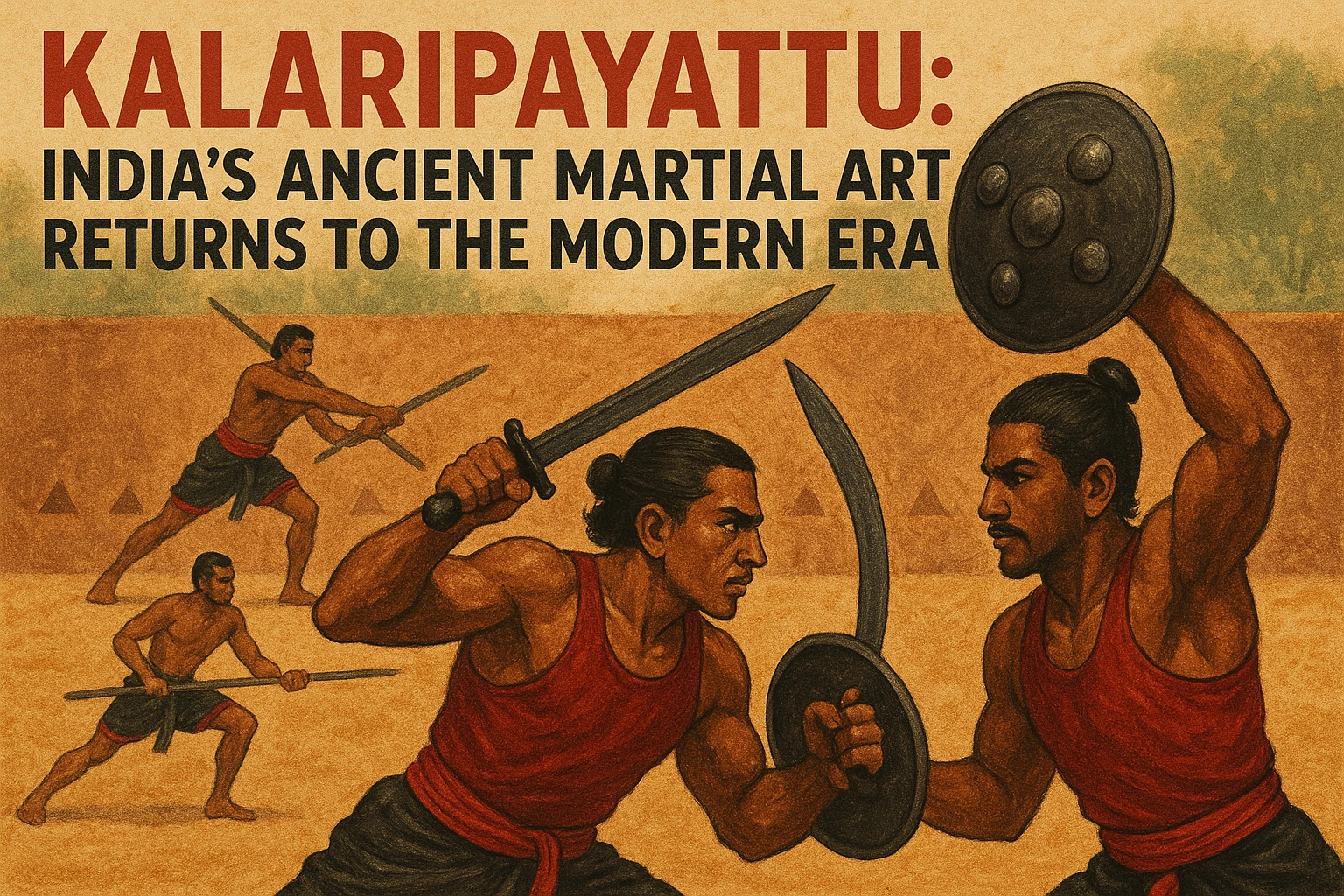
A Forgotten Martial Art — Possibly the Oldest in the World
What is the martial art of Kalaripayattu? Depends on who you ask.
Some call it the first martial art in the world. Others say it’s the mother of Kung Fu. Who’s right? Maybe both.
It all started around 3,000 years ago in Kerala, a vibrant state on India’s southwest coast, known for its spicy fish curries and postcard-perfect landscapes.
The name is quite simple: “Kalari” means battlefield, and “Payattu” means fight.
Mythology and Magic Pits
Here’s where it gets interesting.
According to legend, the entire system was created by Parashurama, a warrior-sage who allegedly carved Kerala from the ocean with an axe. Myth? Sure. But locals take it seriously.
Training happens in underground pits called kuzhikkalari.
Imagine a 42-by-21-foot pit with clay walls and a tiny shrine in the corner. It’s dark, damp, and honestly a little spooky at first. But that’s where the magic happens.
How Ancient Art Was Ignored by Modern India
Here’s something most people don’t know:
Until 2023, Kalaripayattu wasn’t even recognized as an official sport in India. Officials treated it like a folk dance.
Everything changed at the National Games in Goa.
For the first time, Indian martial arts were allowed in real competition. Athletes from 18 countries showed up. I spoke to some — they’d been waiting their whole lives.
Then came 2024. The Indian Olympic Association called it “just a demo”, downgrading it to a non-medal exhibition.
Two hundred athletes, ready for glory, suddenly realized they were just a show for tourists. You can imagine how that went.
A legal case is still ongoing. In January, the Delhi High Court advised the IOA to reconsider. But let’s be honest: the damage was done.
Why the Rest of the World Gets It
Outside India, Kalaripayattu is booming. I have friends in Paris who lose their minds at weekly Kalari classes.
There are schools in London, Tokyo, and even Ohio. It’s spreading faster than any traditional martial art.
Part of that is thanks to movies.
Ever see a Bollywood actor doing insane stunts? Probably trained in Kalari.
Jackie Chan learned it. Some Hollywood choreographers use it.
Even video games like Tekken borrow moves from Kalari.
Platforms like dbbet login now even offer betting options for martial arts tournaments, showing how serious it’s getting.
What Makes Kalari Different From the Gym
I’ve tried a lot of fitness trends.
CrossFit nearly killed me. Hot yoga made me dizzy. Regular martial arts felt too intense.
Kalaripayattu is different.
It’s graceful, almost dance-like. But don’t be fooled — it’s also brutal (in the best way).
Training begins with an oil massage. The full body — head to toe — using feet and hands. Sound relaxing? It’s not. It’s prepping your body to bend in ways you didn’t think possible.
Some studies (don’t ask me which ones) showed that eight weeks of training improved cardio health, body weight, and explosive power.
Personally? After three months, I could touch my toes for the first time since high school, my back pain disappeared, and I slept like a baby.
How to Train Like a 12th-Century Warrior
Traditional training has four stages:
- Meithari – Basic body movements.
Think walking like an elephant, jumping like a frog, slithering like a snake. At first, it’s weird. Then suddenly, you’re twice as flexible. - Kolthari – Wooden weapons.
Long sticks, short sticks, curved sticks. It’s meditative — until someone whacks you for losing focus. - Ankathari – Metal weapons.
Sword, dagger, spear. Things get real here. Thankfully, most schools use blunt replicas. - Verum Kai – Empty hand combat.
Until this stage, you feel like a weapon. Now you become one.
Depending on the school, you could be using weapons within a few months. Others require a year of basics. It all depends on your guru’s philosophy.
Modern Schools, Ancient Soul
Let’s be real: good teachers are hard to find. Most real masters live in Kerala and don’t promote themselves on Instagram.
But schools are popping up everywhere. One of the most well-known is Atma Kalari, founded in 2005.
They mix traditional training with modern comfort (no mud pits, thank god).
Age doesn’t matter. I’ve seen 4-year-olds learn forms, and 60-year-olds improve flexibility. Some programs even cater to people with disabilities.
Yes, there are online classes, but honestly? You need real corrections. This isn’t yoga on YouTube.
Where It’s Going
UNESCO recognized Kalaripayattu in 2016 as Intangible Cultural Heritage. That means something.
The Federation hopes to see it in international competitions within 5 years.
Ambitious? Yes.
Impossible? Maybe not.
But more importantly, Kalari gives people something modern life can’t:
A way to reconnect with the body, the earth, and with patience.
Why I’m Sticking With It
Honestly, it changed how I feel about physical activity.
Most workouts made me miserable.
Running hurts.
Balance boards are boring.
Team sports require coordination I don’t have.
Kalaripayattu feels like a serious game. Sometimes painful, always fun.
You learn to move like a warrior — and get the best workout of your life.
The mental benefits were surprising. Stress? Gone. You can’t worry when you’re dodging a wooden sword.
Is it useful in daily life? Not really.
Is it deeply satisfying? 100%.
Final Thoughts: Why Kalari Matters Today
Maybe the return of Kalaripayattu is telling us something we’re missing.
Tradition. Discipline. Long-term mastery.
In a world of instant everything, this is an art form that refuses to be rushed.
You can’t shortcut Kalari.
Remember that 73-year-old woman?
Minakshi Amma has trained for over 60 years. She’s still learning.
That’s either terrifying or inspiring. For me? It’s both.