



Most casual bettors tend to judge their success in the simplest way possible. They look at the last bet they placed and ask one question: did it win or lose? It feels like the natural way to think about it. Sports themselves are built around winners and losers, so it makes sense that betting would follow the same logic. More experienced bettors, though, usually look at something different. Instead of focusing only on the final result, they pay attention to how the odds they took compare to the closing line. That number, known as closing line value, often gives a clearer picture of whether a betting strategy is actually working.
The difference between results and decisions
A single result in sports rarely tells the full story. A football team can dominate a match, create more chances, and still lose to a late goal. A basketball team can shoot poorly for one night despite taking good shots. Variance is part of every sport.
Betting works the same way. A good bet can lose. A bad bet can win. If someone judges their performance only by short-term results, they are mostly tracking luck, something many players eventually notice after enough sessions, whether they are placing bets from a desktop site or getting a Betway app download on their phone.
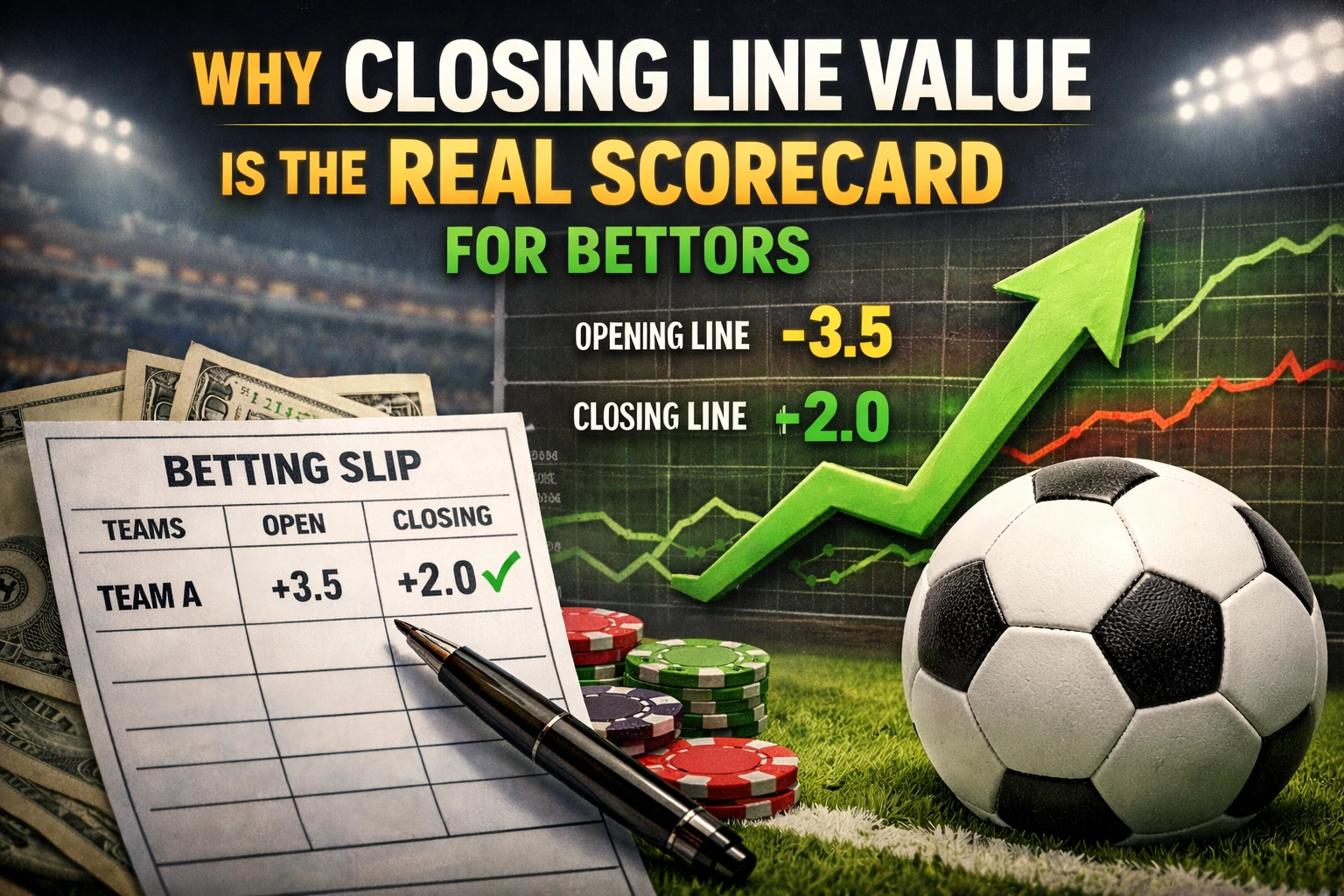
Closing line value focuses on the quality of the decision instead of the outcome. It compares the odds you took with the odds available when the market closed. If you consistently get better numbers than the closing line, it suggests you are beating the market.
What closing line value actually means
Imagine a football match where you back a team at odds of 2.20. By kickoff, those odds drop to 1.95. That shift tells you something important. The market moved in the same direction as your bet. You locked in a better price than what was available at the end. Even if the team loses that day, your decision was still strong from a market perspective. Now imagine the opposite. You bet at 1.80, and by kickoff the odds drift to 2.05. The market moved against you. Even if your team wins, the number suggests the bet was not as strong as it looked at the time. Over a few bets, this difference may not seem important. Over hundreds or thousands, it becomes the clearest indicator of skill.
Why the closing line matters so much
The closing line is not perfect, but it is usually the most accurate number available. It reflects all the information that entered the market before the event started. Injuries, weather, lineup changes, and betting volume all shape that final price. Because of that, the closing line acts like a summary of the market’s collective opinion. Beating that number consistently is difficult. It usually means a bettor is identifying value before the rest of the market adjusts. Professional bettors often track closing line value instead of daily profit. A losing week with strong closing line value can still be encouraging. A winning week with poor closing line value can be a warning sign.
Variance hides the truth in the short term
Short-term results can be misleading. A bettor might go on a winning streak simply because several close outcomes went their way. Another bettor might lose repeatedly despite making strong decisions. Closing line value cuts through that noise. It focuses on the price of the bet rather than the final score. If someone consistently takes odds that later shorten, it suggests they are finding edges. If their bets regularly drift to worse prices, it may indicate that their analysis is off. Over time, the relationship between closing line value and profit tends to become clear. Bettors who beat the closing line regularly are more likely to win in the long run.
A different way to measure progress
Thinking in terms of closing line value changes how a bettor views their sessions. A loss does not automatically mean a mistake. A win does not automatically mean a good decision. Instead of asking, “Did I win today,” the question becomes, “Did I beat the market.” That shift in perspective removes some of the emotional swings that come with short-term results. It also encourages better habits. Bettors start to look for value earlier, compare prices across markets, and think more carefully about timing.
The quiet scorecard
Closing line value is not as exciting as a winning ticket. It does not show up in a highlight reel or in a big payout notification. But it tells a deeper truth about performance. In sports betting, results are shaped by randomness as much as skill. Over short stretches, luck often takes the lead. Over longer stretches, the quality of decisions starts to matter more. That is why many serious bettors treat closing line value as their real scorecard. It measures the strength of their choices, not just the outcomes. And in a game where outcomes are never guaranteed, that distinction makes all the difference.